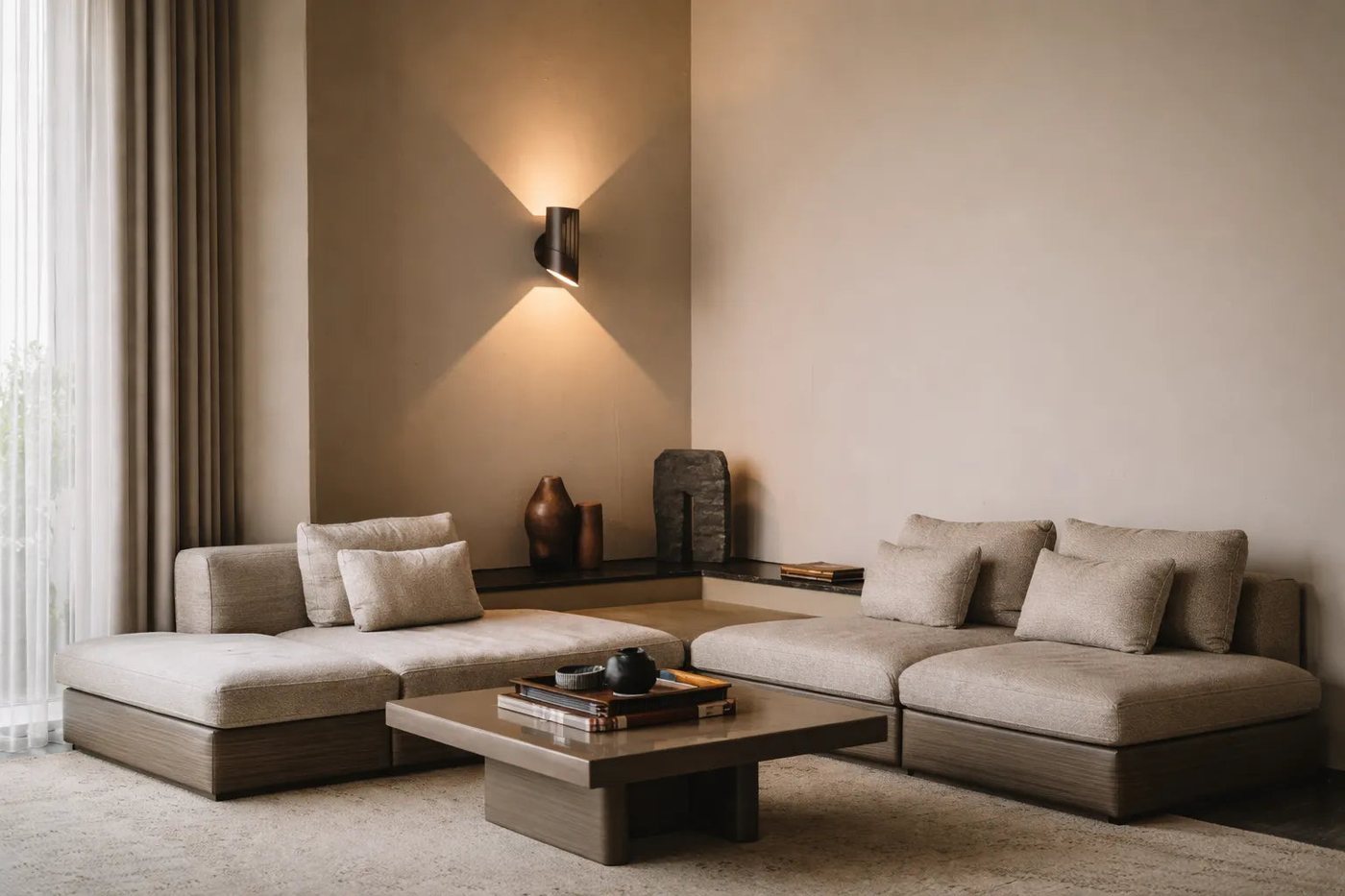
There is a particular moment in every renovation when a room stops feeling like a project and starts feeling like home. It rarely arrives with a wall coming down. More often it comes from layering light, texture and personal meaning in the right order — and from editing out the things that were never really you.
Here is how we approach interiors when a client says, quite reasonably, that they want their house to feel new without starting over.
Start with light, not furniture
Light is the cheapest renovation material there is, and the most misunderstood. Before choosing a sofa or a paint colour, look at how daylight moves through the room. Which walls are in shade for most of the day? Where does the afternoon sun land? Then decide:
- Layer three sources of light — ambient light for the whole room, task light where you work, and low accent light for evenings.
- Fit dimmers everywhere so the same room can be bright for homework and soft for dinner.
- Swap heavy curtains for a linen layer on a track that reaches the ceiling; the room instantly feels taller.
A quick test
Turn every overhead light off and sit in the room at dusk. If the space feels gloomy, your lighting plan needs work — no paint colour can fix it.
Choose a calm base, then add personality
Warm neutrals do not have to mean boring. A restrained base in stone, oat or soft clay gives you freedom everywhere else: art, cushions, ceramics, books, a chair you fell in love with on holiday. The trick is to keep the expensive, hard-to-change elements quiet and put the character into things you can swap next season.
Cues that read as “designed”
- A consistent metal finish repeated three times in a room — handles, lamp, mirror frame.
- One oversized piece of art rather than several small framed prints.
- Texture in threes: a smooth surface, a woven one and something soft.
- Plants at different heights to soften straight architectural lines.
Fix the things you feel but never notice
Comfort is invisible design work. If a door has never closed properly, if the hallway has no place to drop keys, if the kitchen bin is where you cook — those irritations quietly define how the house feels. During a décor upgrade we always budget for a small list of practical fixes:
- Soft-close hinges and better drawer runners in the most-used cabinet.
- Extra power outlets where chargers actually live.
- A dedicated drop-zone near the main entrance: hooks, a bench, a tray for post.
- Sound insulation on the wall shared with a bathroom or bedroom.
A home feels new when the friction disappears. Sometimes that is new flooring — sometimes it is hinges, lighting and a place to put your keys.
Where to spend and where to save
If your budget is limited, put it into anything you touch or walk on: flooring, door handles, tapware, worktops and seating. Save on the purely visual: wall paint you may repaint, accessories, and trends you may outgrow. These priorities also hold true when we plan a bigger remodel, which is why we often recommend handling flooring upgrades at the same time as interior décor — the dust and disruption happen once.
Ready to start?
Send us a photo of the room and a couple of lines about how you use it. We will reply with thoughts on layout, light and finishes — and an itemised plan if you would like to take it further.